|
Early Frank Holton & Co. Trumpets |
|
|
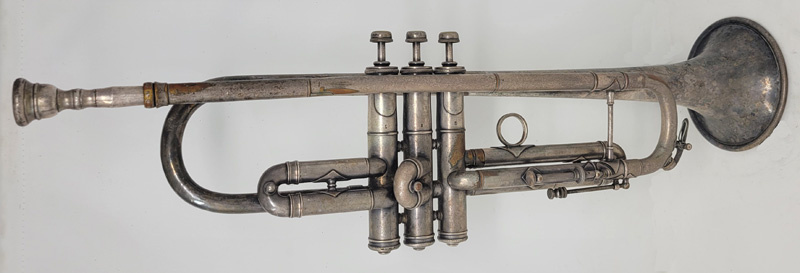
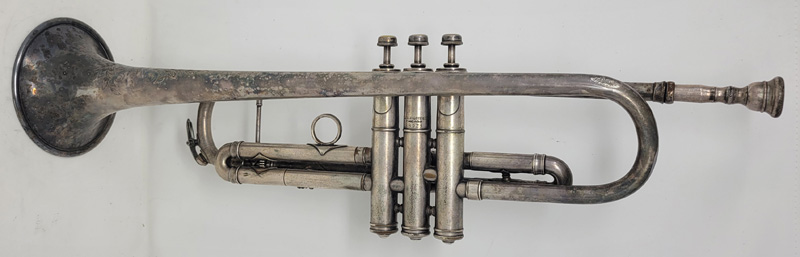
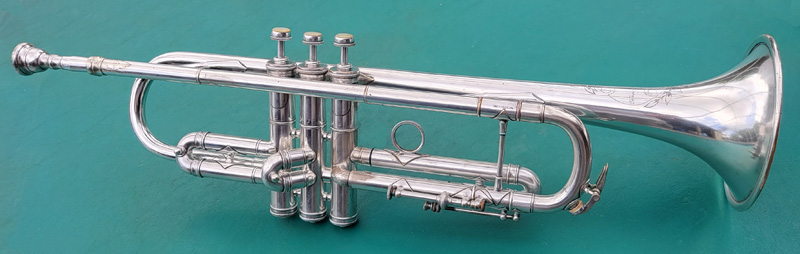
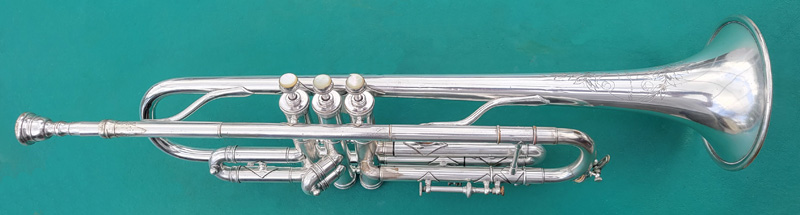
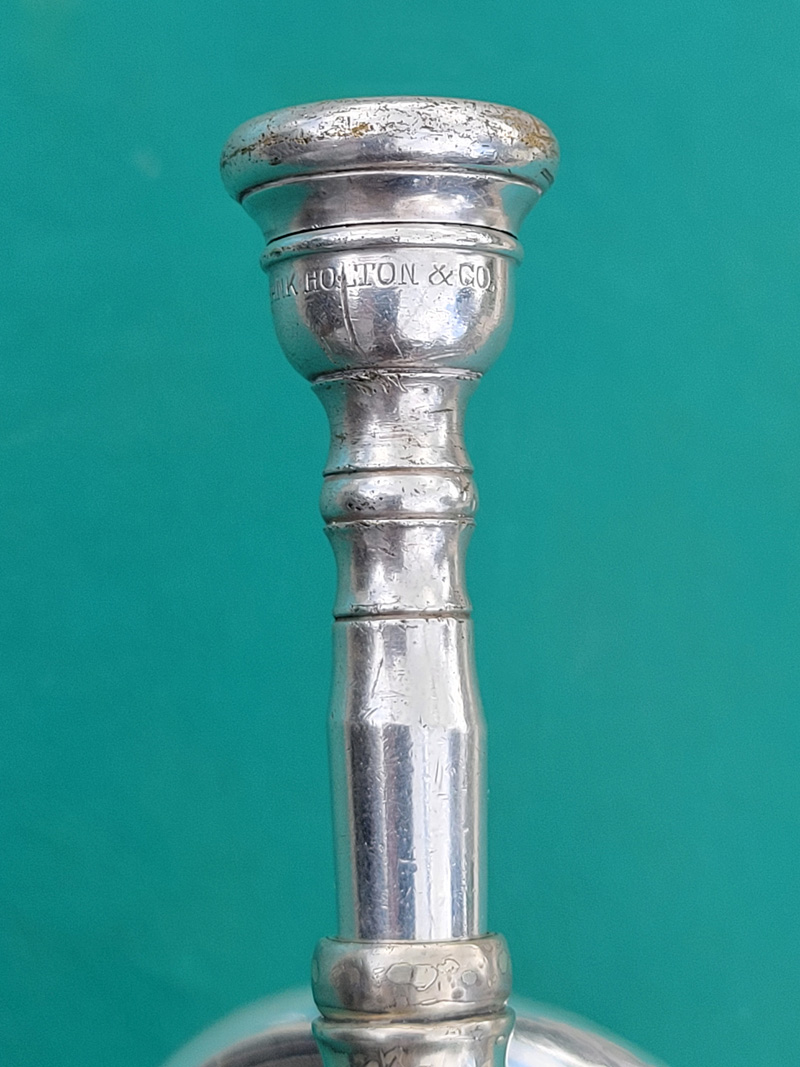
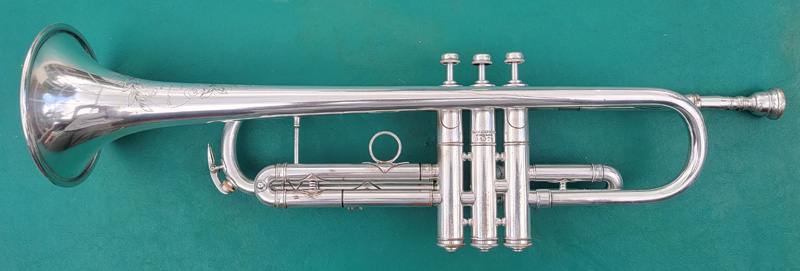
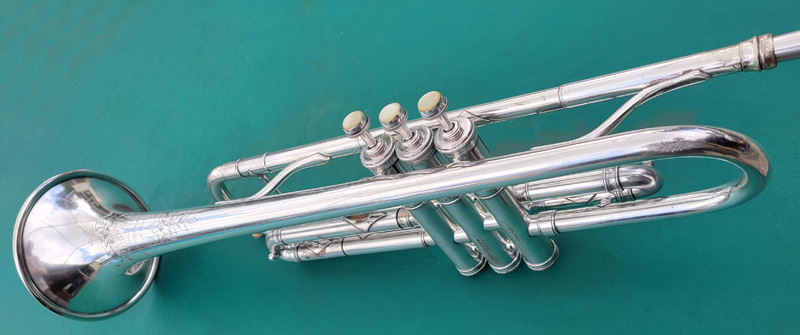
Frank Holton & Co. Model: The Holton Original cost in 1913 = $79.50 [$2,585 in 2025] When Holton introduced their new trumpet design in 1911, it was the first to be seriously considered for use in major symphony orchestras due to the bore size and overall design characteristics. These were used by players like Gustav Heim of the Boston Symphony Orchestra who introduced them to newly arrived Vincent Bach in 1914. This example is from 1913 after the change in the second slide from facing forward to rearward and before the addition of the second tuning stop rod in 1914. This came without any accessories and oddly had low pitch valve slides combined with a high pitch main slide. Originally, it would have had both sets. I happened to have a Chicago Heim mouthpiece that I added to it for the photos. Catalog image from 1911. The third slide ring position makes you use your pinky to control it.
Page from the 1912 Holton Harmony Hints magazine and shown in high pitch.
Some views of the trumpet when purchased. It was wearing modern finger buttons.
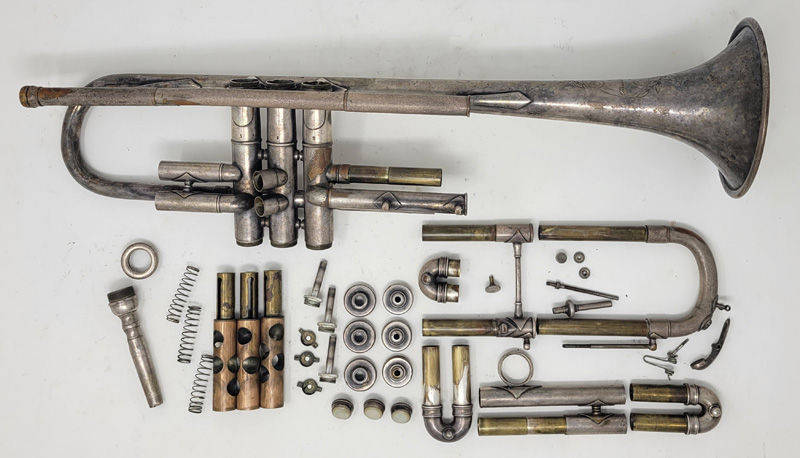
All apart and ready for restoration.
After cleaning and restoration work. The slide stop rod and finger buttons came from parts horns.
I later made a low-pitch slide from various parts.
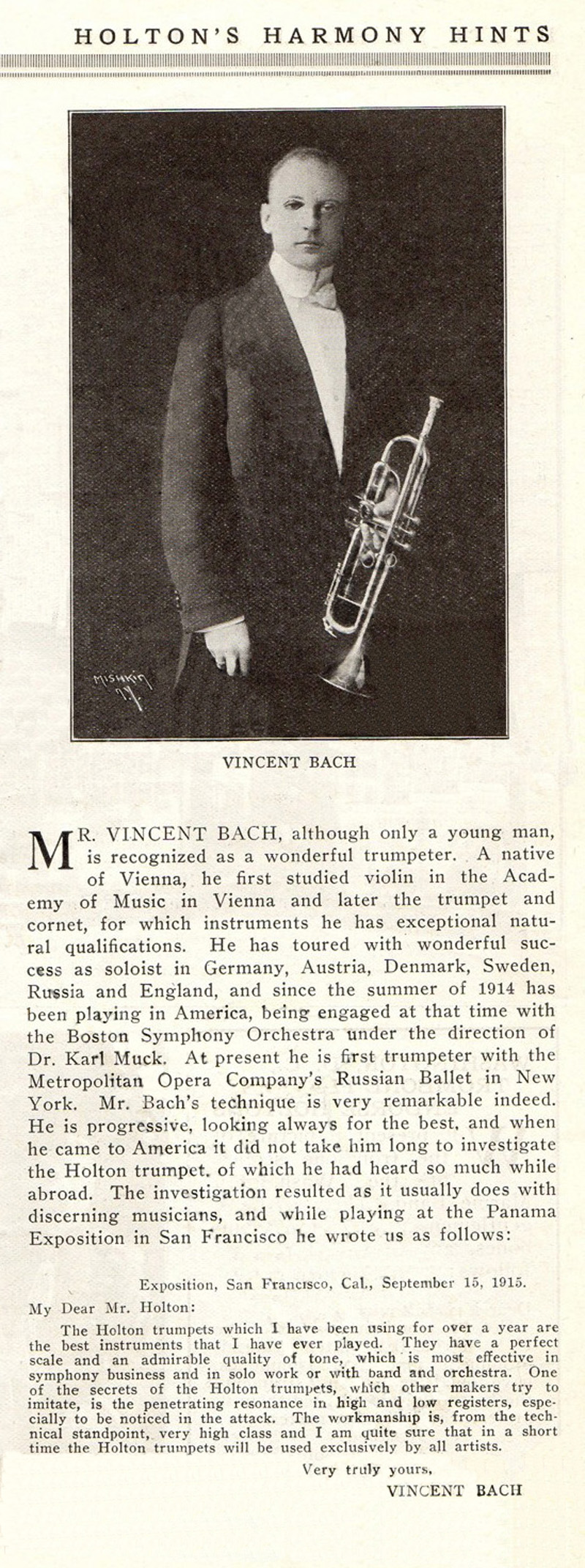
Vincent Bach with his 1914 Holton trumpet at the BSO.
Holton came out with an updated version in 1914 with telescoping tuning slide sections and two control rods. The bore was still the same at 0.462" as well as the bell diameter and length. Here is the 1914 catalog image. The lower rod set the quick change to A and the side rod used a thumb wheel to allow fine tuning. Most surviving examples are missing the rods so perhaps owners removed them over time. The third slide finger ring has been moved back to a more modern position for use with the ring finger.
Here is #25109 that I found in 2026. It appeared to be in great shape but ended up needing a lot of work on the tuning slide. It came with the low pitch valve slides installed and the high pitch tuning slide! Two other high pitch slides for valves 1 and 3 were included, but the rest were missing.
Although the silver plating had no wear, this must have been played for a few years then put away without cleaning since the main tuning slide was completely frozen. The center section of the lead pipe and the top tube for the inner tuning slide were cracked and beyond use from corrosion. This resulted in a very difficult removal process of penetrating fluids, heat, and time in order to remove the tuning slide sections.
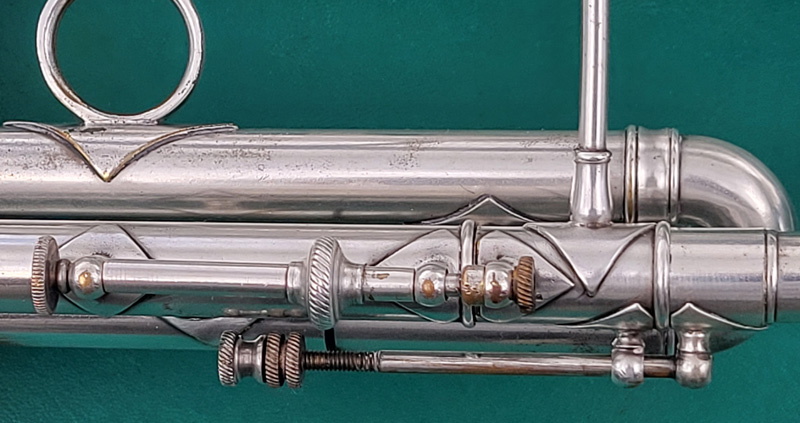
This top slide section is marked "Pat. Feb 28, 99" for Patent #620,450 by John Heald for the telescoping slides.
All cleaned up and ready for reassembly.
Until vintage parts could be found, I bought rods and nuts at a local hardware store to make this work again. The trickiest part was getting the brass tubing set up right so that turning the thumb wheel moved the threaded rod to the right.
Here are three generations of Holtons together; from top 1913, 1914, and 1922 Revelation.
1914 case banner
Gustav Heim was a Holton promoter and got Vincent Bach to try them as well when he joined the Boston Symphony Orchestra.
1917 Example Model: The New Holton Original cost in 1916 = $67 In 2026, I picked up my fourth example of an early Holton trumpet from Chicago. This one appeared to have its original screw-rim mouthpiece and almost all of the tuning rod parts. This appeared to have been well-played but also well-maintained since there were some plating wear spots yet all the valves and slides worked well. As purchased.
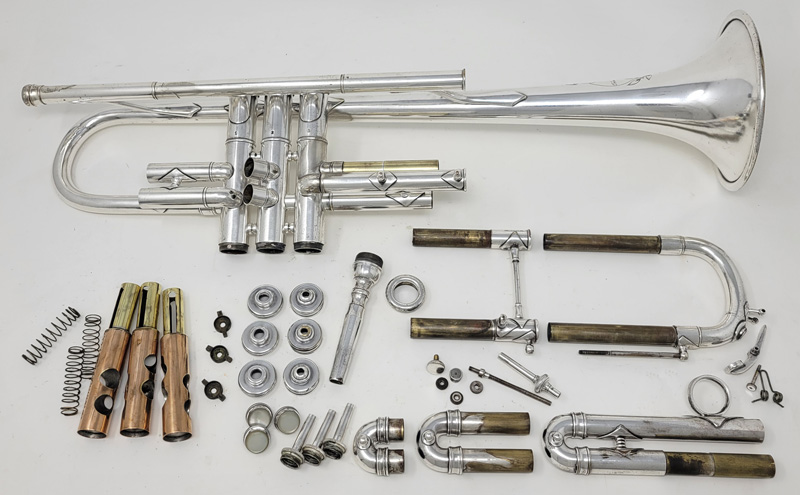
All cleaned up and ready for assembly.
Despite the evidence of many years of playing, this still had tight valves and played very well. Of the four restored over the years, this one was by far the best sounding one. I liked the tone even better than my 1922 Revelation model! Below are the fnished photos.
|